
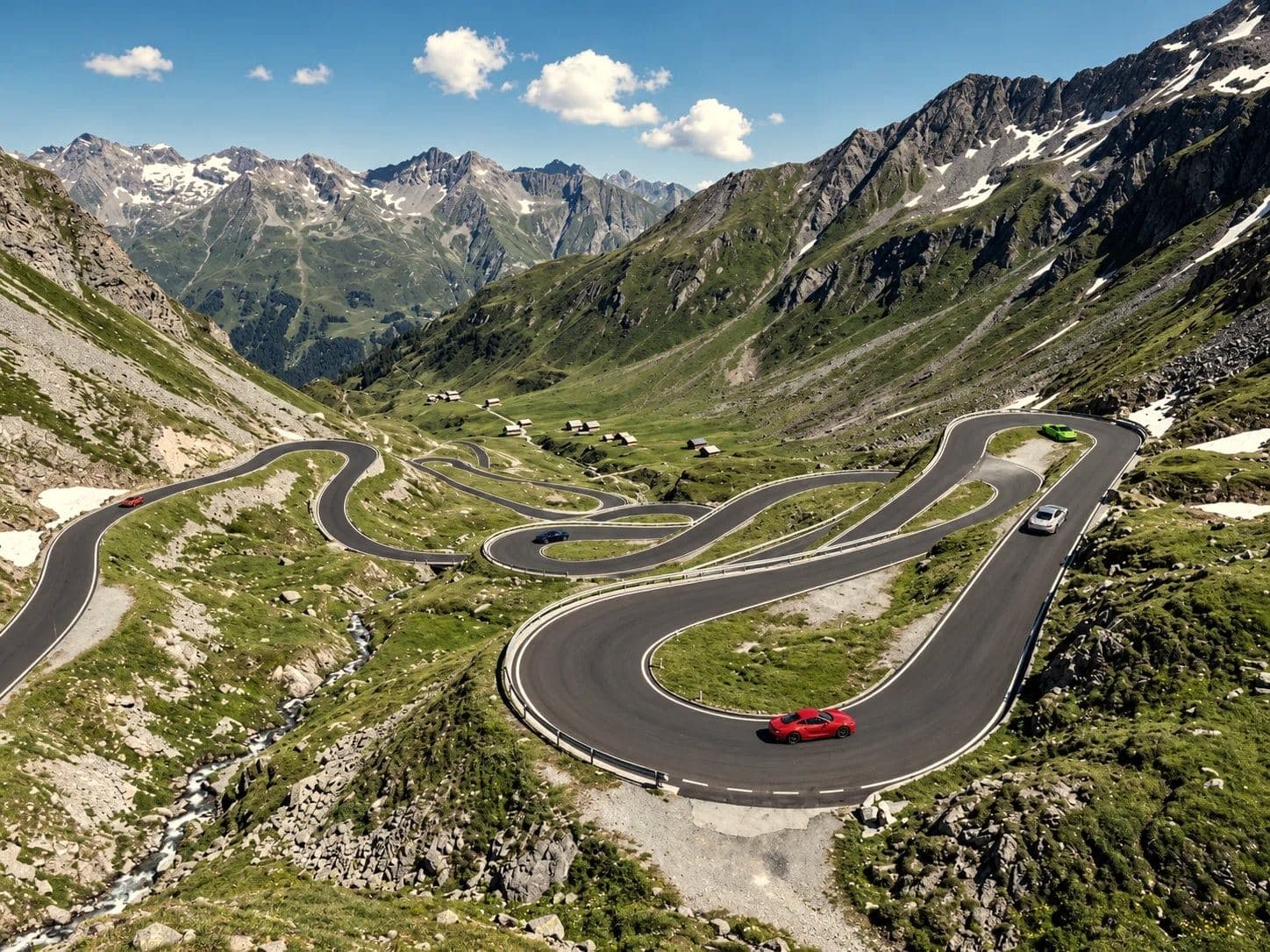
The best part of a week in the Alps begins at Calais, and so can the worst: a car turned away from a motorway for want of a sticker, or a passport that is a month too old. None of it is difficult. All of it is easier done at home, in an evening, than at a border. This is what the club asks members to prepare before the European Tour, and it holds for any drive across the Channel.
The papers that travel in the car
- Your photocard driving licence. A British licence is all that France, Switzerland, Italy and Germany ask of a visitor, and an international driving permit is not needed there.
- The car's V5C registration certificate, the original rather than a copy. A leased or financed car needs a VE103 from the finance company instead, which can take weeks to arrive, so ask for it early.
- Your insurance details. A green card is no longer needed, but a policy may give only the legal minimum abroad unless you ask for more. Confirm in writing that the car is fully covered in every country on the route, and that an organised tour is covered at all.
- Breakdown cover valid in Europe. Many policies cap the value or the age of a car they will recover, so read the limits with your own car in mind.
- Passports for everyone in the car. For most of Europe a British passport must have been issued within the last ten years on the day you arrive, and be valid for at least three months after the day you leave. Check the issue date as well as the expiry date: it is the one that catches people.
At the border
Since October 2025 the European Union has registered British visitors at its outer border, with fingerprints and a photograph taken on the first crossing. At Dover and at Folkestone the French checks happen before you leave England, so allow more time for that first crossing than you are used to. The EU's travel authorisation, ETIAS, is due to follow, so check its status before you travel.
A low car deserves a word when you book. The shuttle at Folkestone is level and easy. Some ferry ramps are steep, so tell the operator what you are driving and ask for a lane that suits it.
Stickers, vignettes and badges
- A UK identifier. Cars registered in Britain now show UK, not GB. If your number plate carries the UK identifier with the Union flag, nothing more is needed; otherwise fit a UK sticker on the back.
- The Swiss vignette. Every car on a Swiss motorway needs one, and it is now electronic, bought online against your registration. Buy it from the Swiss government's own site; others charge more for the same thing.
- Austria has its own digital vignette, with separate tolls on some of its alpine roads.
- France asks for a Crit'Air air quality sticker in the low emission zones of some cities. The rules have changed more than once, so check the cities on your route before you go, and order the sticker only from the French government's own site.
- Germany's city environmental zones ask for a green Umweltplakette.
- The historic centres of Italian towns are closed to visiting cars behind camera controlled ZTL signs, and the fine follows you home, often months later. The roadbook keeps the club out of them. On your own, park outside and walk in.
In the car
- France requires a warning triangle and a reflective jacket for every occupant, the jackets kept where they can be reached from inside the car. Several other countries ask the same, so carry them everywhere.
- Headlamps must not dazzle traffic on the right. Many modern cars change with a setting, while older ones need beam deflectors; your dealer will know which.
- Radar detectors are illegal in France, Switzerland and Germany, and the Swiss police may confiscate one. Leave it at home. The club's app shows camera and police warnings only where a country's law allows them, and nowhere else.
- Speed limits are in kilometres an hour from Calais onwards. Set the car's display to match before you board, not on the autoroute.
- The French autoroutes take cards at the toll, but in a right hand drive car the booth is on the wrong side. A toll tag, ordered in advance, lets you drive through the lane without leaning across the car.
- Fuel: 98 octane is sold as SP98 in France, Super Plus in Germany and Bleifrei 98 in Switzerland. Fill up the evening before a day in the mountains, where pumps are far apart and close early.
The car itself
Have the car serviced a month before you leave, not a week, so that anything found has time to be put right. Check the tyres for depth and age, and pack the repair kit if the car carries no spare. The high passes reward good brakes, so have the fluid checked: a long descent from 2,000 metres will find any weakness. Above all, take the car you love and trust, not the one you are still getting to know.
What the club does for you
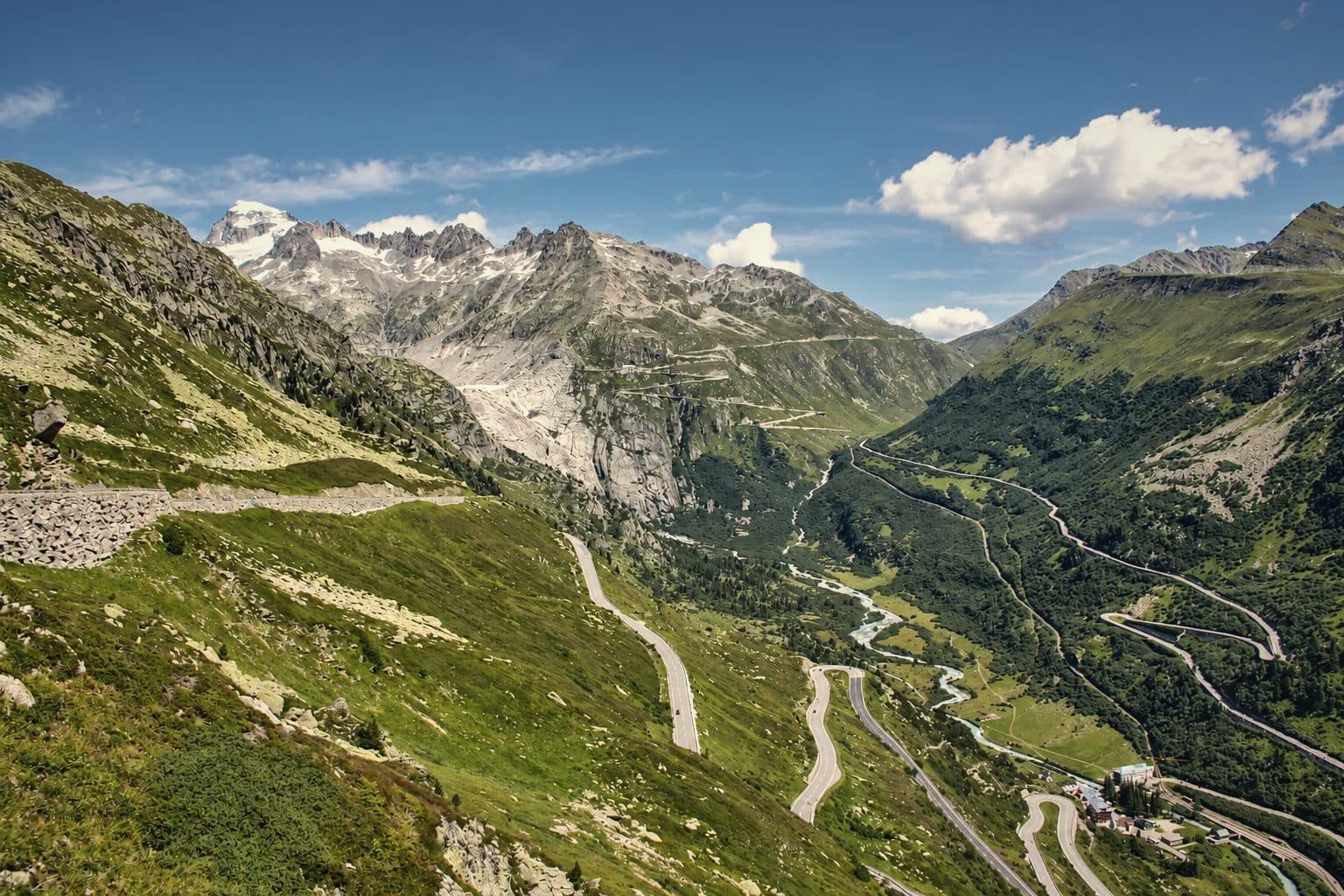
On a Valenza Privé tour the roadbook carries every turn, every pump and every border, with the alternative if a pass is shut. Each tour has its own Before you go page in the members' area, setting out what to prepare and by when. Every hotel is slept in by us before a member stays, the cars are behind a locked gate or under a camera every night, and the club team is on call for the whole of the tour.
The European Tour runs in June 2027, from Ascona on Lake Maggiore to Interlaken beneath the Bernese Oberland. Members hear first when places open, and membership begins with an application, read personally by the team. If this is the drive you have been meaning to make, we would be glad to hear from you.