Switzerland keeps its finest roads in a small space. Between Lake Maggiore and the Bernese Oberland lie some of the highest passes in the country, close enough together that a week can take in eleven of them. That is the shape of the club's European Tour in 2027, and it is the best way we know to drive the Swiss passes by car.
Two bases, not seven hotels
A week on the passes is better built around two places than around a different hotel every night. The first three nights are at Ascona on Lake Maggiore, among the palms. The last three are at Interlaken, under the Bernese Oberland. Between them are five days at the wheel, and on every one of them the luggage stays where it is.
The Simplon and the Nufenen
The first full day leaves Ascona through the Centovalli, the hundred valleys, and crosses into Italy by Val Vigezzo. From there the road turns north through the Gondo gorge and climbs to the top of the Simplon at 2,005 metres, followed by the long, fast curves down to Brig. Up the Goms valley, the day closes on the Nufenen. At 2,478 metres it is the highest pass of the week and one of the highest roads in Switzerland, and it brings you down the far side into Ticino and home.
The lakes on the Italian side
The second day is gentler, and deliberately so. The west shore of Lake Maggiore runs past the Borromean Islands to Stresa and Arona, then into the wooded hills above Varese, and home up the east shore by Luino with the water beside you the whole way. It is the day for a long lunch and an unhurried car, and a partner who would rather not spend a day on the passes has the lake.
North over four passes
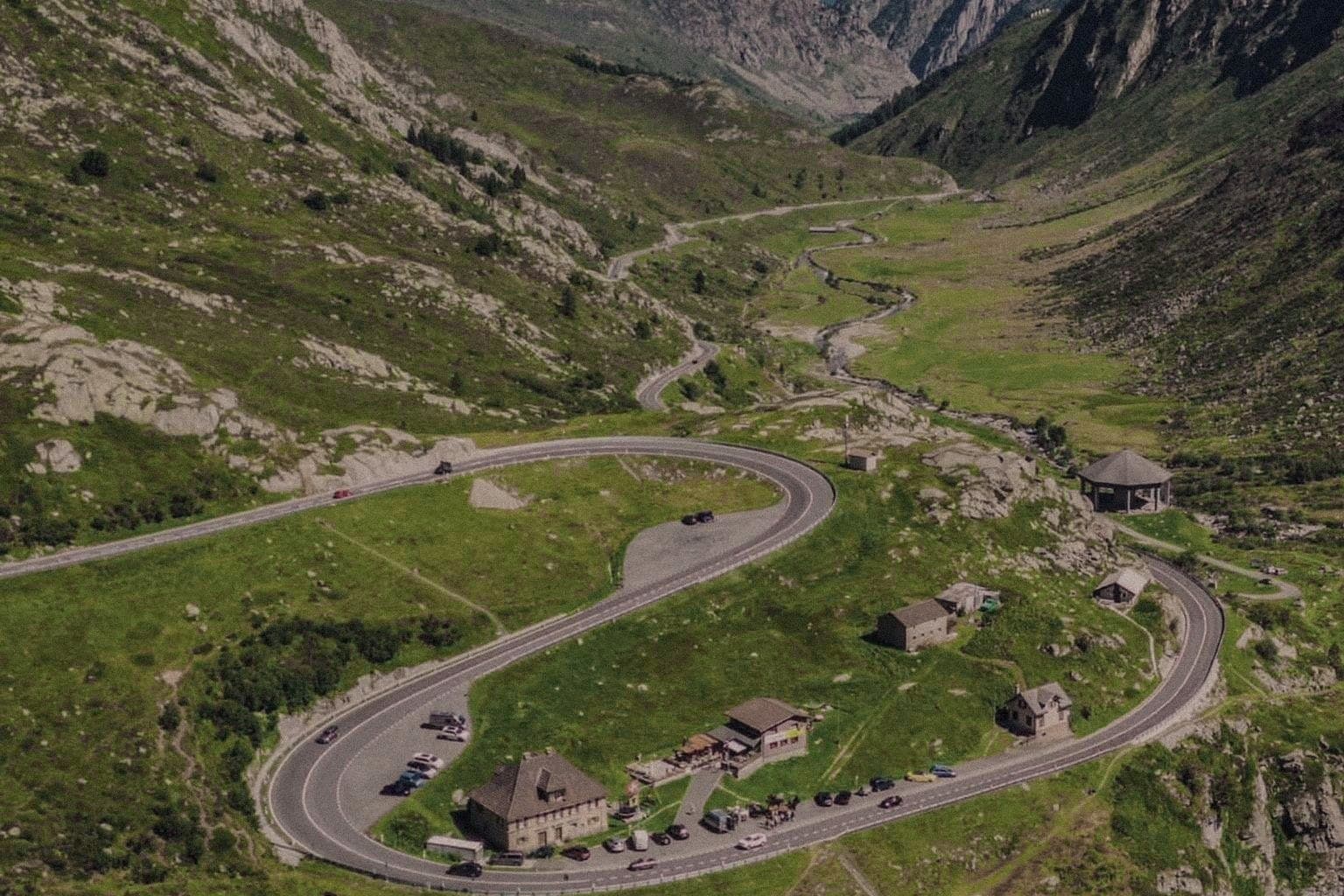
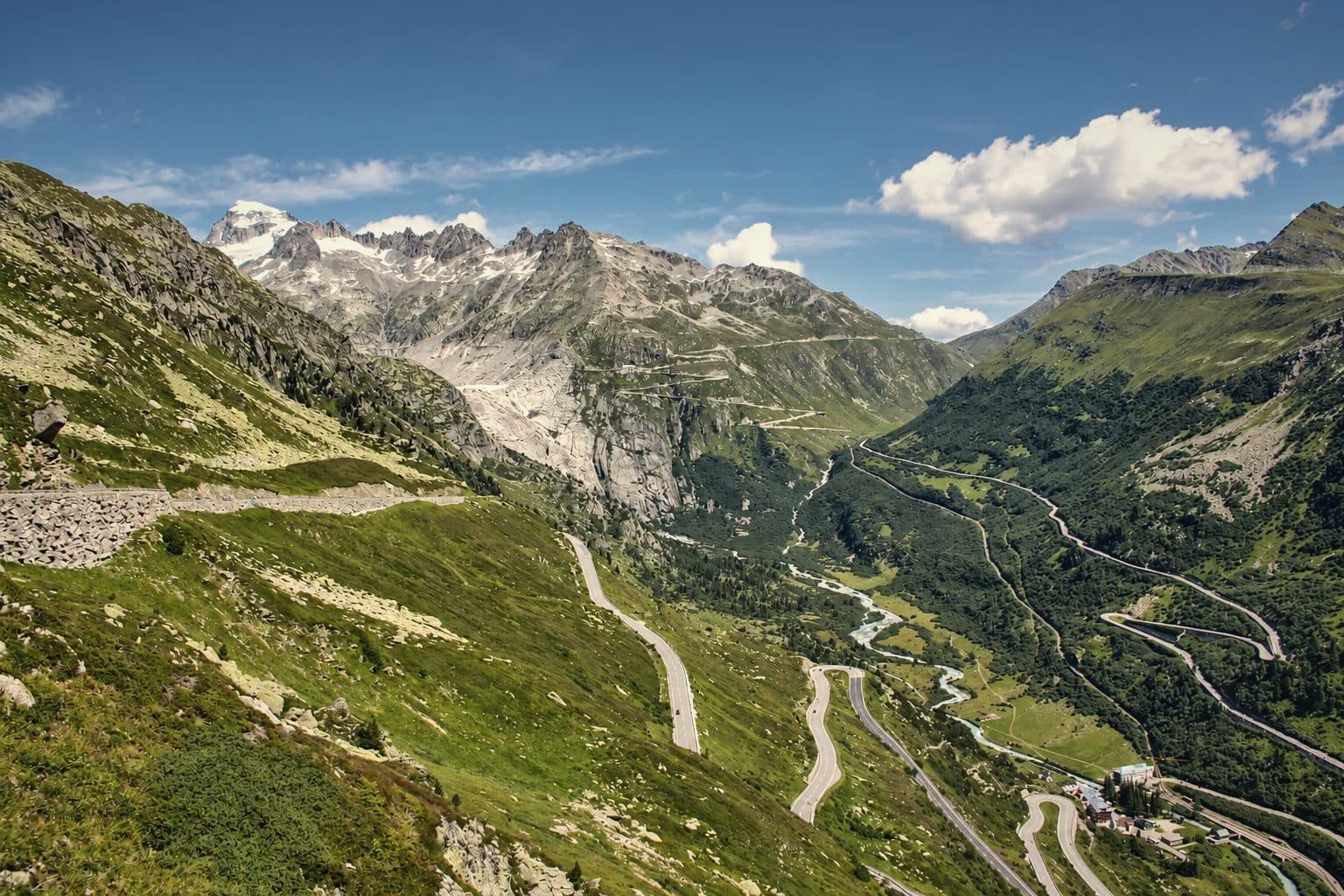
The great day of the week moves the party from Ticino to the Oberland, and it does so over four passes in one run. Up the quiet Val Blenio to the Lukmanier, across by Disentis to the Oberalp, and lunch above Andermatt with the valley below. Then the Furka, at 2,429 metres, with the hairpin above the Rhône Glacier that is one of the most photographed bends in the Alps. From Gletsch the Grimsel climbs straight up past the dams and the high lakes, then makes the long descent down the Hasli valley towards Lake Brienz, and Interlaken by the evening.
The Oberland, and the quieter cols
From Interlaken one day takes in four of the great Swiss passes: the Grimsel again, the Nufenen, the Gotthard from Airolo down to Andermatt, and the Susten. The Susten, at 2,224 metres, is broad and sweeping, and it carries you back into the Oberland.
The last driving day runs west on roads few visitors ever find. Through the Simmental and Gstaad, over the Col du Pillon and the Col des Mosses into French speaking Switzerland, lunch below the walls of Gruyères, and home over the Gurnigel above Lake Thun. It ends with the last dinner, the one still being talked about.
What to know before you go
- The high passes open in late spring and close in the autumn, which is why the tour runs in June. Above 2,000 metres it can be cold when the lakes are warm, so pack a jacket.
- Parts of four days use Swiss motorway, so every car needs the Swiss vignette, bought online before you leave.
- Switzerland treats serious speeding as a crime, with the licence and even the car at stake. Swiss law also forbids warning of speed cameras or police checks, so the club's app shows neither there.
- Two of the days cross into Italy and back, and Switzerland sits outside the EU customs area, so passports travel in the car. Your insurance and breakdown cover must name both Switzerland and Italy.
- Fill up the evening before each driving day. Both bases have 98 octane close by, and the roadbook marks the pumps on the way.
- Ascona is two comfortable days from Calais, and the tour ends at Interlaken, about two days' easy driving from Calais again.
Driven first, by us
Every road on the route is driven in full, in season, before a member sees it, and the roadbook carries every turn, with the alternative if a pass is shut. Every hotel is slept in by us before a member stays and every dinner is eaten first. Cars are behind a locked gate or under a camera every night, and there is a drink waiting when you arrive, without you having to ask. The pace is the road's: brisk where it invites it, gentle where it does not, and always within the law.
The European Tour is our first in Europe, and like all of our tours, places are few. The tour page sets out the route and the roads. Members hear first when the dates and places are released, and membership begins with an application, read personally by the team. If these roads are the ones you have been meaning to drive, we would be glad to hear from you.